Workweek Rhythms Shape Preferences for Lengthy Sagas Over Brief Sessions on Portable Devices and Living Room Consoles
Drew Sullivan · Oct 27, 2026
Workweek Rhythms Shape Preferences for Lengthy Sagas Over Brief Sessions on Portable Devices and Living Room Consoles
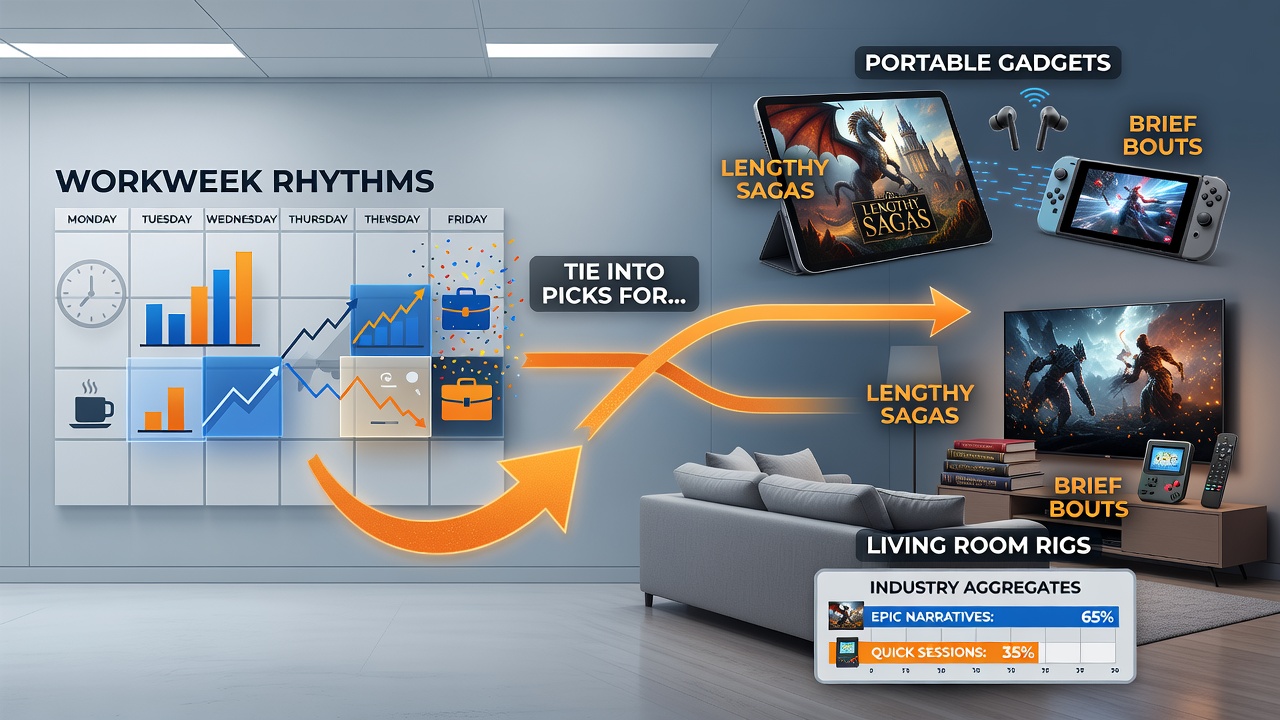
Data from industry aggregates indicates that workweek cycles directly correlate with selections between extended narrative experiences on living room consoles and shorter interactive sessions on portable gadgets, with patterns emerging consistently across multiple 2026 surveys released in October. Players often adjust their game lengths based on available time blocks created by standard Monday through Friday schedules, and this adjustment shows up in platform choices where mobile devices handle fragmented hours while home rigs support deeper dives during downtime. Aggregates compiled by trade groups reveal that midweek commitments lead to higher engagement with games designed for 15 to 30 minute intervals on handhelds, whereas weekend blocks align more frequently with titles requiring multiple hours per sitting on stationary systems.
Patterns in Daily and Weekly Time Allocation
Industry reports track how typical employment structures create distinct windows for gaming, and those windows determine whether participants gravitate toward lengthy sagas or brief bouts. Figures from October 2026 polling show that individuals with standard daytime work obligations report 62 percent of their mobile play occurring during commutes, lunch breaks, or evening wind-down periods, while console sessions cluster around Friday evenings through Sunday afternoons. This distribution emerges because portable gadgets support immediate start-and-stop mechanics that fit irregular intervals, and living room setups reward sustained attention that becomes available only when work demands recede. Observers note that these rhythms hold across regions, with similar splits appearing in both urban and suburban datasets.
Device Shifts Tied to Schedule Intensity
Portable gadgets see increased usage during high-intensity work periods, according to aggregated player responses collected through multiple platforms. When workweeks extend beyond 40 hours, selections shift toward games with modular progression systems that allow completion of small objectives without long-term commitment. In contrast, living room rigs register higher activity once work demands ease, and players then select expansive titles with branching stories or open-world elements that unfold over dozens of hours. Research indicates this pattern strengthens in October data releases, where seasonal workload changes coincide with measurable upticks in console-based saga selections on weekends. Those who maintain consistent weekday routines demonstrate clearer separation between device types compared with shift workers whose schedules vary daily.
Genre and Purchase Correlations From Aggregates
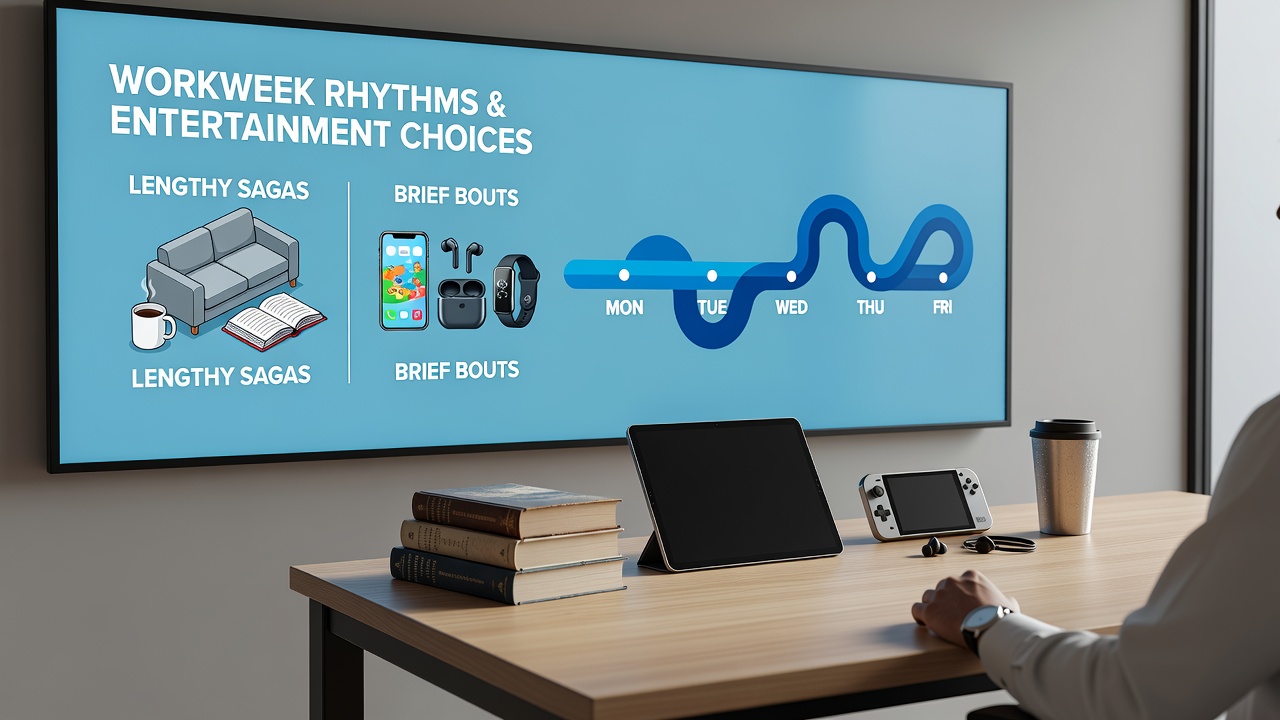
Industry aggregates link workweek structures to specific genre preferences within each device category. Brief bouts on portables frequently involve puzzle, idle, or competitive multiplayer formats that conclude quickly, while lengthy sagas on living room rigs lean toward role-playing, adventure, and simulation categories that reward cumulative progress. Purchase data from the same October 2026 collections shows subscription services for home consoles experiencing higher activation rates among participants reporting predictable weekend availability, whereas mobile in-app acquisitions spike during midweek periods. These connections appear across income brackets and education levels, suggesting schedule rhythm functions as an independent variable rather than a proxy for other demographics.
Regional and Demographic Consistency in 2026 Findings
Survey clusters from multiple countries demonstrate that the relationship between work schedules and device selection persists regardless of geographic location. European trade data aligns closely with North American figures in showing elevated portable usage on weekdays, and Australian aggregates mirror the same weekend concentration on stationary systems. Within these datasets, age groups display parallel trends, although younger cohorts report slightly higher overall portable engagement during work hours. The consistency across regions points to universal time-allocation pressures rather than cultural differences in gaming habits.
Implications for Platform Ecosystems
Platform holders have responded to these documented rhythms by adjusting content pipelines and feature sets. Portable ecosystems emphasize cross-session saving and notification systems that facilitate short returns, while living room hardware receives updates focused on enhanced narrative delivery and social features suited to longer group sessions. Aggregates from industry organizations confirm that these adaptations correlate with measured increases in session completion rates when device recommendations align with users' reported workweek availability. Continued monitoring through late 2026 will determine whether these alignments produce sustained shifts in hardware adoption patterns.
Conclusion
October 2026 industry aggregates establish clear connections between workweek rhythms and the division of gaming activity between portable gadgets and living room rigs. Lengthy sagas cluster around periods of extended availability, whereas brief bouts dominate fragmented weekday intervals. These patterns hold across regions and demographic categories, providing platform developers with concrete usage data that informs ongoing content and feature strategies.