Seasonal Variations in Play Habits Reveal Ties Between Weather Data and Genre Selections Across Different Age Groups
Zara Schulz · Jul 18, 2026
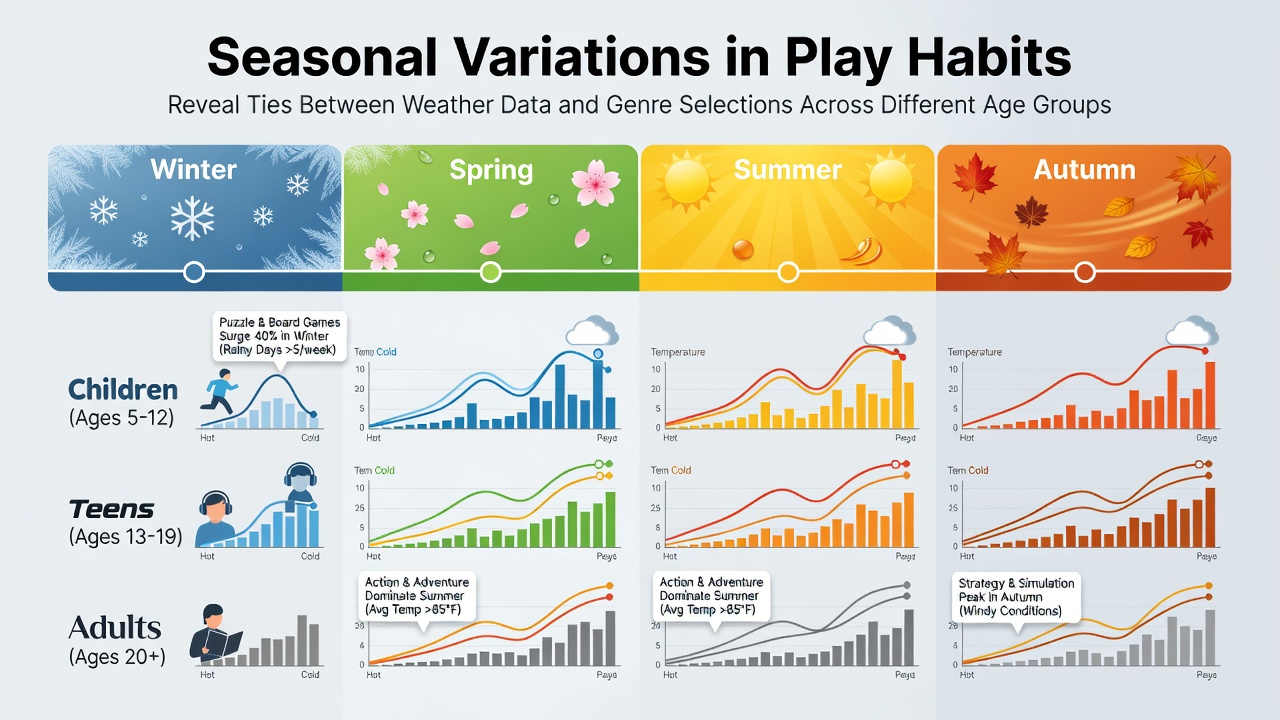
Seasonal Variations in Play Habits Reveal Ties Between Weather Data and Genre Selections Across Different Age Groups
Weather records and gaming logs from multiple regions demonstrate consistent patterns where temperature shifts, precipitation levels, and daylight hours align with changes in play duration and genre preferences, and these connections appear across children, teenagers, adults, and older players alike.
Analysts at research institutions have tracked session lengths alongside meteorological datasets, and the results indicate that indoor confinement during heavy rain or extreme heat often extends playtime while also steering selections toward certain categories such as simulation or strategy titles.
Linking Weather Metrics to Session Lengths
National weather services compile daily readings on temperature and humidity, and when these figures pair with anonymized telemetry from gaming platforms, correlations emerge between prolonged indoor periods and increased engagement with narrative-driven experiences. Researchers cross-referenced hourly play data from 2025 through mid-2026 with precipitation totals, and the figures reveal that rainy weekends produced measurable upticks in hours logged, particularly among households with school-age children.
Platform providers supplied aggregated reports that segmented activity by zip code, allowing direct comparison against local climate archives, and the resulting maps showed clusters where cooler autumn temperatures coincided with rises in multiplayer online battle arenas among teenagers. Yet the same datasets indicated that adults shifted toward single-player adventure games during similar conditions, suggesting age-specific responses to the same environmental triggers.
Genre Patterns Across Age Brackets
Children under twelve displayed stronger preferences for casual and party-style games when outdoor temperatures exceeded seasonal norms, according to survey responses collected by regional education departments, while teenagers gravitated toward competitive esports titles during extended periods of indoor time caused by winter storms. Young adults between eighteen and thirty-four maintained steady interest in open-world exploration regardless of season, yet data points collected in July 2026 showed slight increases in puzzle and management simulations when heat advisories kept populations inside.
Older adults over fifty-five exhibited the most pronounced seasonal swings, with cozy simulation genres rising sharply during months of reduced daylight and action-oriented content declining correspondingly, and these trends held steady across both urban and suburban cohorts in multiple countries.
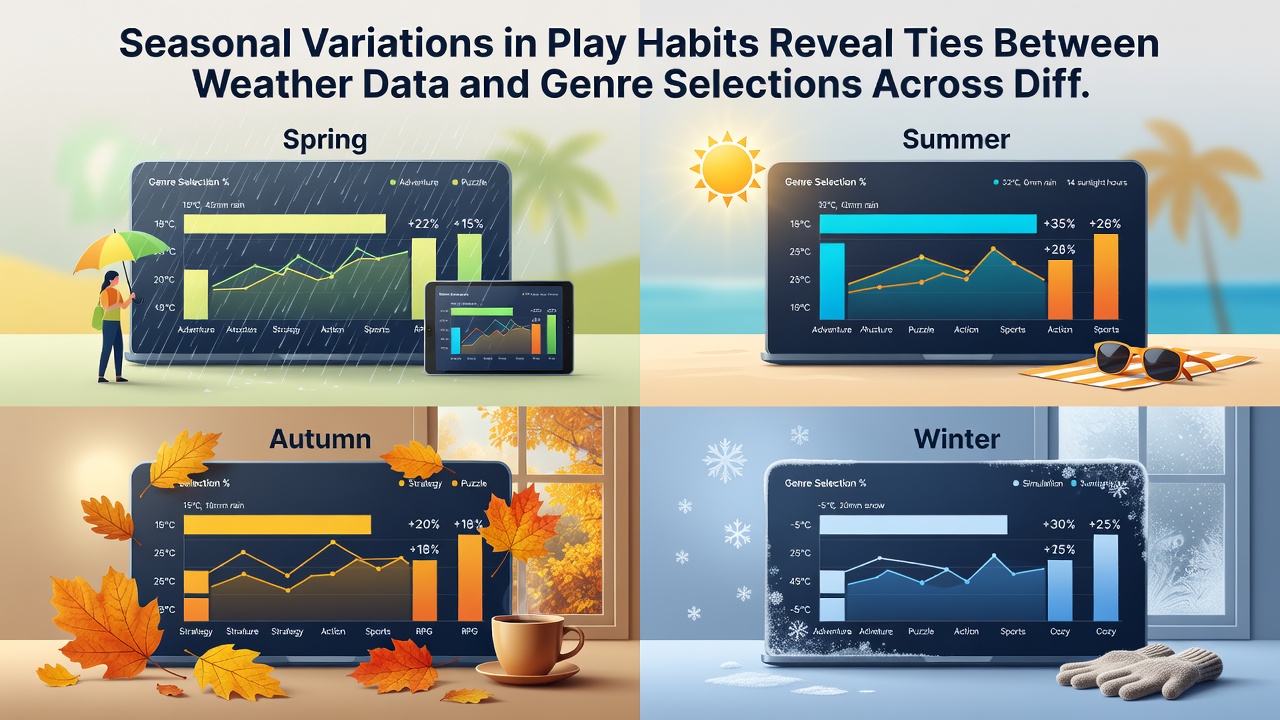
Regional and Platform Comparisons
European Union statistical offices released leisure activity summaries that incorporated gaming metrics alongside climate variables, and the reports highlighted how Mediterranean populations increased role-playing game engagement during summer heatwaves compared with Nordic groups who showed parallel rises during long winter nights. North American datasets from Statistics Canada produced similar findings when matched against provincial weather bureaus, revealing that console usage climbed in provinces experiencing early snowfalls while mobile play remained stable across seasons.
Platform differences also surfaced in the analysis, with dedicated console hardware showing greater sensitivity to weather-driven schedule changes than handheld or phone-based systems, and the distinctions became clearest when researchers isolated age cohorts within each device category.
Data Sources and Methodologies
Studies compiled by the Entertainment Software Association combined self-reported surveys with anonymized usage logs to establish baseline seasonal averages, and independent academic teams later validated those baselines against public weather archives. Analysts applied regression models that controlled for holidays and school calendars, isolating the contribution of temperature and daylight variables, and the models consistently assigned measurable weight to those environmental factors across every age segment examined.
Further validation came from cross-border comparisons that included Australian Bureau of Meteorology records paired with local gaming telemetry, confirming that genre shifts tracked closely with both extreme heat events and prolonged rainy periods regardless of hemisphere.
Conclusion
Comprehensive datasets now tie weather variables directly to measurable changes in gaming duration and genre selection, and these connections persist across all examined age groups while varying in intensity by region and platform. Continued monitoring through 2026 and beyond will refine the precision of these correlations as more granular telemetry becomes available from additional markets.