Polling patterns expose links between occupational demands and evolving tastes in digital entertainment platforms
Drew Sullivan · Aug 13, 2026
Polling patterns expose links between occupational demands and evolving tastes in digital entertainment platforms
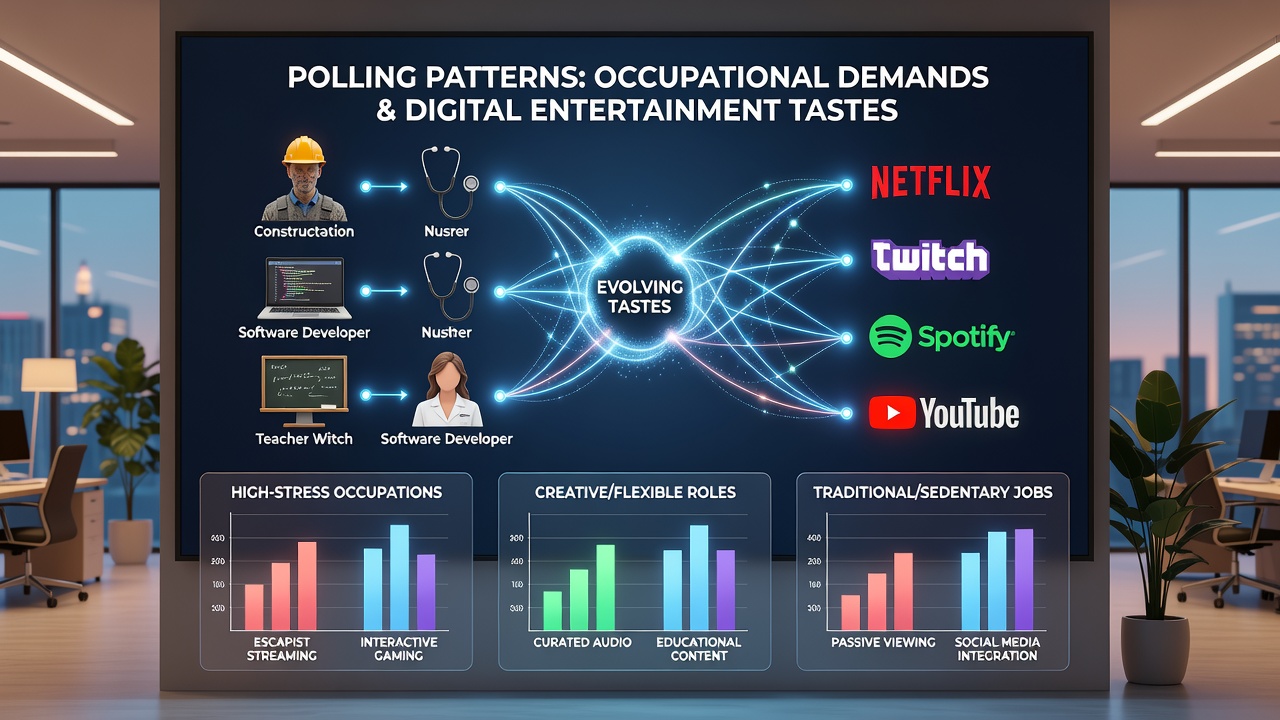
Recent polling data collected through mid-2026 has begun to map clear connections between the structure of various occupations and the digital entertainment platforms that workers select during their available downtime, with patterns emerging around shift lengths, stress levels, and remote versus on-site requirements. Researchers at multiple institutions have noted that individuals in high-demand fields often gravitate toward shorter, on-demand content formats while those with more predictable schedules show higher engagement with longer narrative series or interactive platforms.
Shift work and platform selection trends
Data gathered across North American and European labor markets indicates that employees working irregular or overnight shifts demonstrate elevated usage of mobile-first platforms that allow quick session starts and stops, whereas traditional nine-to-five workers allocate more time to larger-screen streaming services during evening hours. A report issued by the U.S. Bureau of Labor Statistics time-use surveys aligns with these findings by showing measurable differences in leisure activity duration based on daily work patterns recorded through August 2026. Observers note that healthcare workers and transportation professionals frequently cite convenience and portability as primary factors when choosing entertainment options after extended periods on duty.
Remote versus office-based occupation influences
Those employed in fully remote technical roles display stronger preferences for multi-device ecosystems that blend productivity tools with entertainment access, while office-based administrative staff lean toward dedicated entertainment platforms that provide clear separation between work and leisure activities. European Commission digital behavior studies released in summer 2026 further document how home-office setups correlate with increased consumption of live-streaming services during daytime breaks. Figures from these analyses reveal that remote workers average longer cumulative platform sessions yet shorter individual viewing blocks compared to their on-site counterparts.
Stress intensity and content format preferences
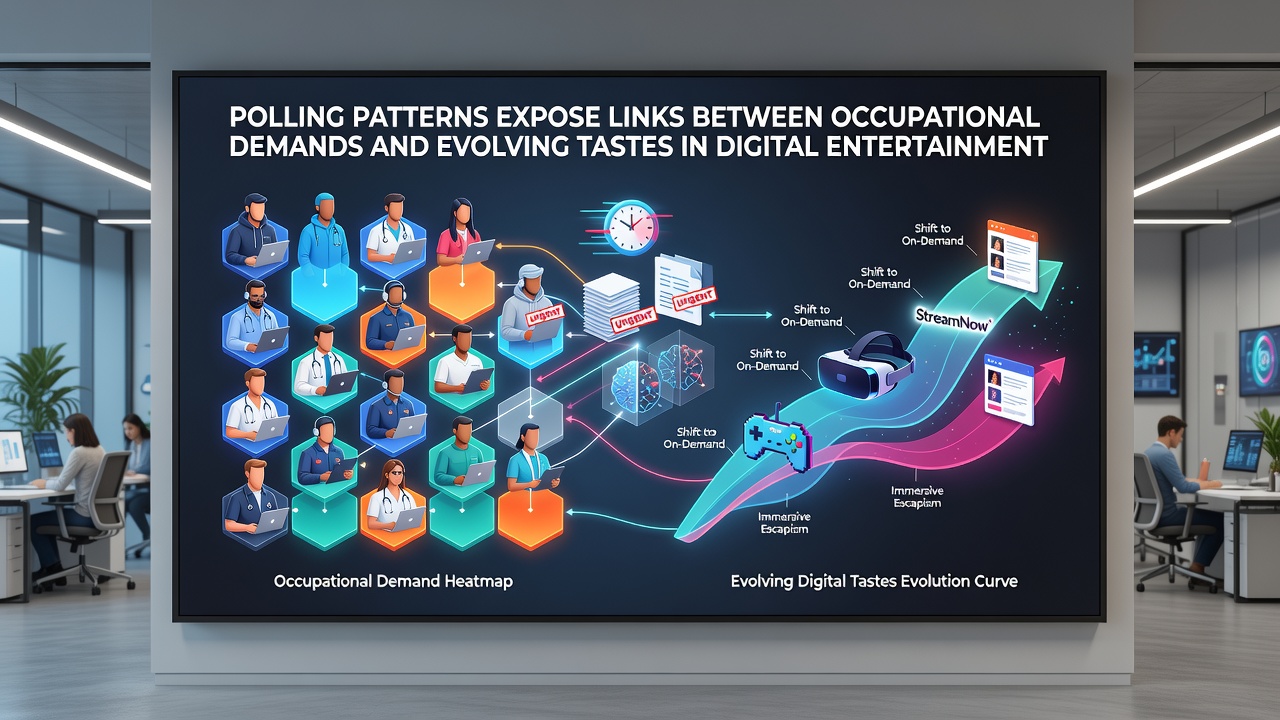
Occupations characterized by elevated decision-making pressure or customer-facing responsibilities show statistical ties to short-form video platforms and episodic content that requires minimal sustained attention. In contrast, roles involving repetitive physical tasks or lower cognitive load during work hours correspond with higher rates of long-form documentary viewing and serialized storytelling on major subscription services. Polling conducted by research consortia in Australia and Canada during 2026 has quantified these relationships through large-scale respondent panels segmented by industry sector. Analysts highlight that the timing of entertainment consumption also shifts, with high-stress occupations reporting peak platform use during early morning hours before shifts begin.
Income brackets and subscription patterns across sectors
Cross-tabulated survey results demonstrate that mid-level management positions in finance and consulting sectors allocate larger portions of disposable income toward premium multi-platform bundles, whereas skilled trades and manufacturing roles show greater uptake of free or ad-supported tiers on the same services. These spending distinctions appear alongside variations in device ownership, with construction and logistics workers maintaining higher mobile-only access rates. Data compiled through August 2026 polling cycles indicates that occupational category remains a stronger predictor of platform tier selection than age or geographic region alone in several tested markets.
Emerging correlations in leisure time allocation
Longitudinal tracking of respondent behavior across consecutive survey waves points to gradual platform migration as individuals change occupations, with transitions from corporate to freelance work often accompanied by increased use of interactive and community-driven entertainment formats. Government statistical agencies in the United Kingdom and New Zealand have incorporated occupation codes into recent digital leisure studies, enabling finer-grained analysis of these transitions. Evidence from these datasets suggests that the physical demands of a job interact with available recovery time to shape not only which platforms people choose but also how they structure their engagement sessions throughout the week.
Conclusion
Collective polling evidence accumulated through 2026 continues to underscore the role of occupational structures in guiding digital entertainment platform adoption and usage patterns. As labor markets evolve and remote arrangements persist across sectors, researchers anticipate further refinement of these observed correlations through expanded international datasets. The documented linkages between work demands and platform preferences offer measurable indicators for both industry analysts and labor economists examining contemporary leisure behavior.