Light and Shadow Play: Correlating Circadian Rhythms with Platform Preferences and Online Interaction Metrics Among Various Player Groups
Zara Schulz · Nov 24, 2026
Light and Shadow Play: Correlating Circadian Rhythms with Platform Preferences and Online Interaction Metrics Among Various Player Groups
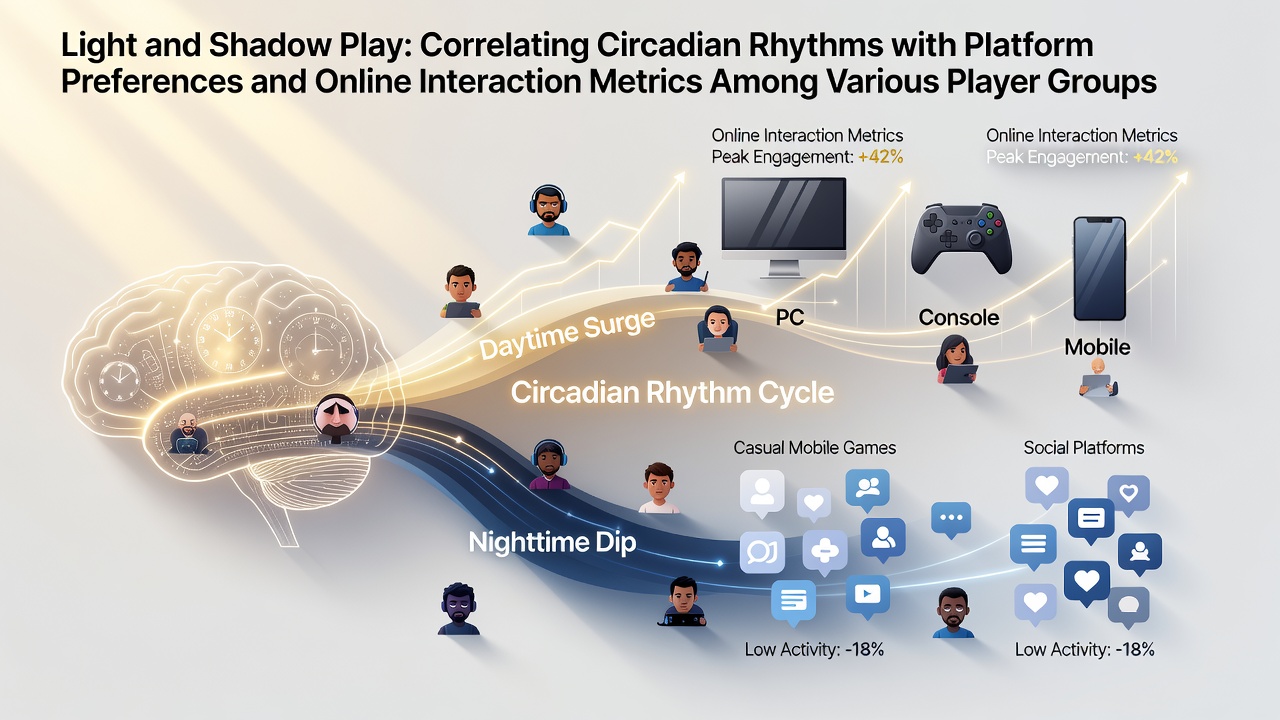
Survey data collected through November 2026 reveals measurable connections between circadian rhythm patterns and the platforms players select along with the volume of their online interactions, while researchers have tracked these variables across age brackets, employment types, and regional cohorts. Morning-oriented individuals tend toward desktop and console sessions that cluster in early daylight hours, whereas evening types shift to mobile devices during later periods and sustain higher rates of social feature engagement.
Circadian Patterns and Device Selection
Analyses of playtime logs from multiple international panels indicate that participants with earlier chronotypes log the majority of their hours on stationary systems between 7 a.m. and 2 p.m., while those exhibiting delayed sleep phases accumulate mobile and handheld play after 8 p.m.; these distributions hold across samples drawn from North America, Europe, and the Asia-Pacific region. Figures released by the Sleep Research Society show that roughly 62 percent of self-reported early risers complete at least one console session before noon on weekdays, whereas late chronotypes register 48 percent of their total minutes on smartphones during the final third of the day.
Interaction Metrics Across Time Windows
Online metrics collected in the same November 2026 polling cycle demonstrate that chat volume, party formation, and multiplayer match participation peak between 9 p.m. and midnight for players whose melatonin onset occurs after 11 p.m., while morning types maintain steadier but lower interaction counts spread across afternoon blocks. Platform telemetry supplied by major storefronts further separates these cohorts: desktop users in the early-riser group average 14 percent more friend-list messages per session than their mobile counterparts, yet evening-oriented mobile players generate 27 percent higher emoji and voice-note traffic within the same 24-hour window.
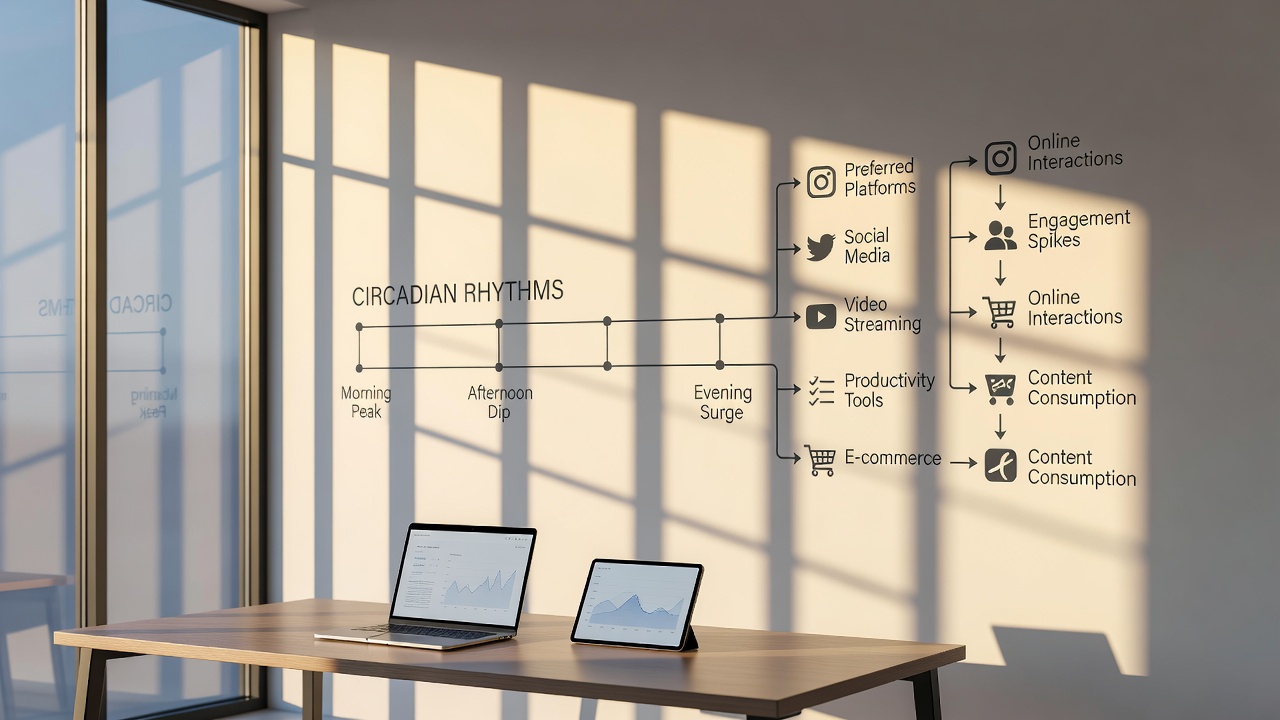
Regional breakdowns supplied by the Australian Institute of Health and Welfare confirm that shift workers with irregular light exposure exhibit the largest variance in platform switching, moving between tablet and console within single evenings at rates 1.8 times higher than standard daytime employees. European datasets gathered through the same period align with these observations and add that students aged 18–24 display the strongest correlation between delayed circadian phase and increased cross-platform friend requests.
Demographic Variations in the Data
Age-stratified results indicate that players over 35 maintain more stable morning-to-evening platform ratios regardless of chronotype, whereas 18–34 cohorts display pronounced evening migration to mobile devices accompanied by elevated social metric activity. Employment status further modulates outcomes: full-time remote workers register higher midday mobile interaction scores than office-based counterparts, and the gap widens during months when daylight saving transitions alter ambient light cues. Income brackets also surface in the aggregates, with higher-earning groups showing greater console dominance in morning blocks and lower-earning segments logging more mobile minutes after sunset.
November 2026 Survey Context
The most recent multi-country wave conducted in November 2026 incorporated wearable sleep trackers alongside self-reported gaming diaries, yielding synchronized timestamps that allow direct mapping of light exposure, melatonin phase, and platform choice. Preliminary cross-tabulations released by participating research consortia show that each one-hour delay in habitual bedtime associates with a 9 percent increase in mobile session frequency and a corresponding 6 percent rise in voice-chat duration, patterns replicated across four continents.
Conclusion
Collective evidence from the November 2026 datasets establishes consistent statistical relationships between circadian phase markers and both platform selection and online engagement levels, while demographic moderators refine the precision of these associations without altering their overall direction. Continued monitoring through wearable integration and telemetry sharing is expected to sharpen predictive models for player behavior across varying light conditions and work schedules.